Why the 6th and 7th Arrondissements Remain Paris’ Most Protected Luxury Markets
There are arrondissements in Paris that attract attention, and there are arrondissements that command it. The 6th and 7th occupy a category that very few addresses anywhere in the world can claim — not simply prestigious, but structurally protected. Protected by their architecture, by their planning constraints, by the profile of the people who have always chosen to live there, and by a scarcity of supply that no amount of demand can alter.
For serious buyers operating at the highest level of the Paris market, understanding why these two arrondissements remain the most resilient and most sought-after addresses in the city is not a matter of taste. It is a matter of investment logic.
What Makes an Arrondissement Structurally Protected
Not all prestigious addresses are equally protected. Prestige can be manufactured, at least temporarily, by the right developer, the right marketing campaign, or the right wave of international attention. Structural protection is different. It is built into the physical and legal fabric of a place in ways that cannot be reversed by a change in fashion or a shift in capital flows.
The 6th and 7th arrondissements are protected on multiple levels simultaneously.
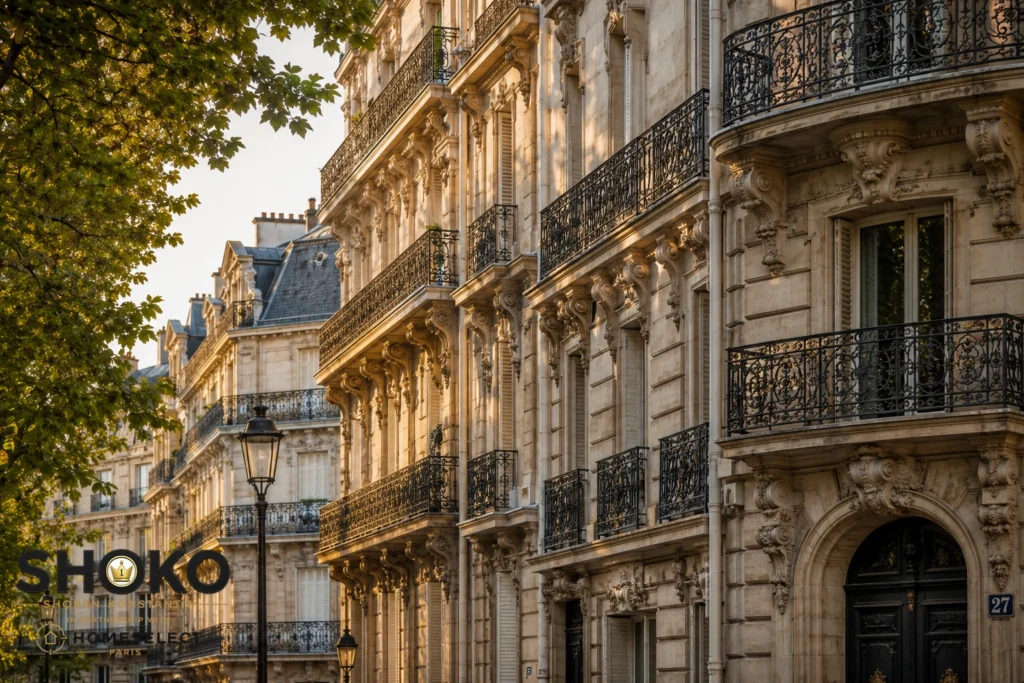
Architecturally, both arrondissements are dominated by Haussmann-era and pre-Haussmann buildings whose facades, heights, and streetscapes are subject to strict preservation regulations. New construction of any significant scale is essentially impossible. The building stock that exists today is, with very limited exceptions, the building stock that will exist in twenty years. Supply cannot expand to meet demand.
Demographically, both arrondissements have historically attracted a resident profile — French establishment families, senior diplomats, international institutions, old European wealth — that is self-reinforcing. The people who live there tend to attract similar people. The social fabric of the neighbourhood becomes part of the asset itself.
Institutionally, the 7th is home to the French government’s most significant buildings — the Assemblée Nationale, the Hôtel Matignon, multiple ministries, and a concentration of foreign embassies. This institutional presence imposes its own discipline on the neighbourhood. It cannot be rezoned, redeveloped, or repositioned. It is permanent.
The 6th Arrondissement: Cultural Capital as Real Asset Value
The 6th arrondissement — Saint-Germain-des-Prés, the Luxembourg quarter, the streets around the Odéon — carries a cultural weight that translates directly into property values in ways that are difficult to quantify but impossible to ignore.
This is the arrondissement of French intellectual and artistic life. The cafés where Sartre and Beauvoir wrote. The galleries that have defined European contemporary art for three generations. The publishing houses that remain clustered around the rue Jacob and the boulevard Saint-Germain. The Luxembourg Gardens, one of the finest urban parks in the world, which serves as the arrondissement’s living room.
For international buyers, the 6th offers something that newer or more recently prestigious neighbourhoods cannot: depth of character. The cultural identity of Saint-Germain-des-Prés was not constructed by a real estate developer. It accumulated over centuries. That depth is what gives it permanence.
The apartment stock in the 6th reflects this layered history. Buildings from the 17th, 18th, and 19th centuries coexist on the same street. Ceiling heights, stone staircases, original parquet floors, and the particular quality of light that comes through tall French windows onto narrow Left Bank streets — these are physical characteristics that cannot be replicated and cannot be built new. They exist only in buildings that have been standing for a hundred and fifty years or more.
For buyers at the highest level of the market, this irreproducibility is the point. They are not buying square metres. They are buying something that by definition cannot be created again.
The 7th Arrondissement: Discretion as a Premium
If the 6th carries cultural prestige, the 7th carries something slightly different — a quality of discretion that has become one of the most valued characteristics in the ultra-luxury market.
The 7th is not the arrondissement that appears most frequently in glossy real estate publications. It does not have the highest concentration of designer boutiques or the most visible restaurant scene. What it has is a residential seriousness that serious buyers find profoundly attractive. People who live in the 7th chose it specifically because it is not performative. The streets around the rue de Varenne, the rue de Grenelle, and the boulevard des Invalides are among the quietest and most considered residential addresses in Paris.
The Eiffel Tower, from the right apartment on the right street, is not a tourist spectacle. It is a private view — one that has no equivalent anywhere else in the world and that the planning framework ensures will never be obscured by new construction. The views in the 7th that exist today are views that will exist indefinitely.
The off-market dimension of the 7th is more pronounced than almost anywhere else in Paris. Families who have owned apartments in this arrondissement for two or three generations do not list them publicly. When they decide to sell — which is rarely — they do so through trusted introductions. The buyer who finds the best properties in the 7th through a public portal is not finding the best properties in the 7th. They are finding what was left after the private market had its first conversation.
Why These Two Arrondissements Behave Differently in Downturns
The most compelling argument for the structural protection of the 6th and 7th is not what happens in strong markets — it is what happens when conditions deteriorate.
Paris real estate, taken as a whole, is not immune to economic cycles. Prices adjust. Liquidity tightens. Transactions slow. But the 6th and 7th have consistently demonstrated a pattern of adjustment that is shallower and shorter than the broader market. When values decline, they decline less. When values recover, they recover faster. The buyer pool for these arrondissements — international, high net worth, motivated by long-term ownership rather than short-term speculation — is simply more resilient than the buyer pool for most other markets.
This is not a coincidence. It is a structural consequence of who buys there and why. Ultra-high net worth buyers who purchase in the 6th or 7th are not typically leveraged to the hilt and forced to sell when credit conditions tighten. They are long-term holders whose investment horizon absorbs short-term volatility without requiring exit. That ownership profile creates price stability that reinforces itself over time.
What Buyers at This Level Are Actually Looking For
Buyers who approach the 6th and 7th at the highest price points are not primarily motivated by yield. Rental income is welcomed but rarely the primary driver. What they are seeking is a combination of characteristics that is genuinely rare in global real estate terms.
They want permanence — the confidence that what they are buying will be as desirable in thirty years as it is today. They want discretion — the ability to own and occupy without that ownership becoming a matter of public knowledge or social performance. They want architectural quality that cannot be manufactured — the bones of a building that was constructed to last centuries and has proved it. And they want the particular kind of access that only comes through a market where the best properties never reach the public domain.
Meeting all of those criteria simultaneously, at the level of quality that genuine ultra-luxury buyers demand, is only possible in a very small number of addresses in the world. The 6th and 7th arrondissements of Paris are among them.
Why Independent Representation Is Non-Negotiable at This Level
At the price points that define the 6th and 7th arrondissements — where a single transaction can represent a significant portion of a buyer’s global wealth allocation — the quality of representation is not a secondary consideration. It is the primary one.
The best properties in these arrondissements are never publicly listed. Accessing them requires relationships that take years to build and a reputation for bringing qualified, serious buyers who close. Due diligence at this level requires not just legal and financial competence but an understanding of the specific characteristics that define value in these particular buildings and streets. Negotiation requires cultural fluency, timing sensitivity, and the ability to represent a buyer’s interests without ever compromising the discretion that both parties require.
This is the work that serious buyer representation does in the 6th and 7th. Not finding properties that anyone could find. Finding the ones that only become available through the right introduction, at the right moment, to the right buyer.
If you are considering an acquisition in the 6th or 7th arrondissement, contact SHOKO for a private and confidential conversation about what is currently available.
Recommended Reads:
- Why Discreet Buyers Continue to Pursue Off-Market Paris Apartments — 1empress.com
- Off-Market Luxury Apartments in Paris 7th, 8th, and 16th: A Private Acquisition Strategy — 1empress.com
- Why London Buyers View Paris Real Estate Through a Different Lens — gtamarket.ca
- What a Buyer Agent in France Actually Does That Estate Agents Do Not — buyeragentfrance.com